Choosing the Right Wood for Faux Beams: A Guide for Montana Homes
Faux beams have become one of the most popular ways to add warmth, character, and architectural interest to a home without the structural weight (or cost) of true load-bearing timber. Whether you’re finishing a great room, adding definition to a kitchen ceiling, or bringing rustic charm to an entryway, the wood you choose for your faux beams makes all the difference in how the final look feels — polished, rustic, modern, or somewhere in between.
At Wilson Cabinetry, we build custom millwork for homes across Montana, Wyoming, and Eastern Idaho, and faux beams are one of the most requested details in mountain-style and transitional homes. Here’s what you need to know about choosing the right wood species for your project.
Why Wood Choice Matters for Faux Beams
Faux beams are typically hollow, built from three sides of wood over a frame, which means they’re lighter and more flexible to install than solid timber. But because they’re purely decorative, the wood species you choose is about aesthetics, durability, and finish — not structural load. That gives homeowners more freedom, but it also means the details (grain pattern, color, texture) carry more visual weight in the final design.
The right species depends on the style you’re going for, the room’s lighting, and how the beams will be finished (stained, whitewashed, painted, or left natural).
Popular Wood Species for Faux Beams
1. Douglas Fir
Douglas fir is a go-to choice for mountain and craftsman-style homes, and for good reason. It has a warm, reddish-brown tone with a straight, prominent grain that reads as classic and substantial. Fir takes stain beautifully, which makes it easy to match to existing trim, flooring, or cabinetry.
Best for: Traditional mountain homes, craftsman interiors, spaces where you want the beams to feel like a natural extension of the home’s woodwork.
2. Reclaimed or Rustic Oak
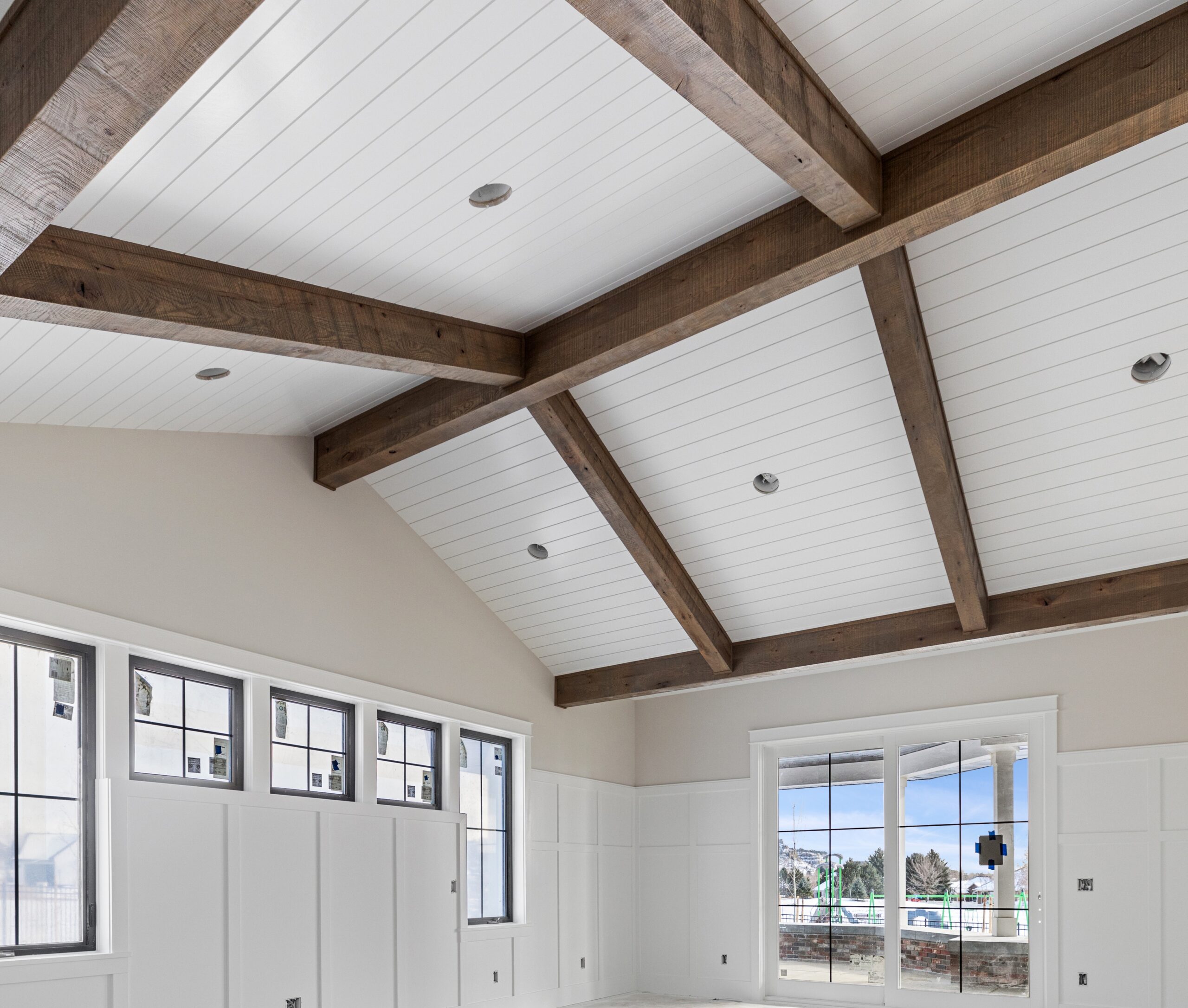
Oak brings a heavier, more rugged texture than fir, with deeper grain lines and natural character marks like knots, checking, and saw texture. Reclaimed oak, in particular, carries the marks of age — nail holes, weathering, subtle color variation — that instantly make a space feel established rather than newly built.
Best for: Rustic and farmhouse-style homes, spaces where the beams are meant to be a focal point rather than a background detail.
3. White Oak
While reclaimed oak leans rustic and heavily textured, White Oak offers a cleaner, more refined take on the same species. It has a straighter grain pattern, fewer knots, and a warm honey-to-tan color that works well in both traditional and modern spaces. White Oak also takes stain evenly, giving homeowners flexibility to go lighter and contemporary or deeper and more traditional.
Best for: Transitional and modern farmhouse homes, spaces where you want the strength and character of oak without a heavily distressed look.
4. Alder
Alder is a favorite in the Pacific Northwest and mountain West for its smooth, even grain and light-to-medium brown tone. It doesn’t have the bold grain pattern of oak or fir, which makes it a great option for homeowners who want the look of wood beams without an overly busy or rustic feel.
Best for: Transitional or modern-rustic homes, spaces where a cleaner, more refined look is desired.
5. Pine (Knotty or Clear)
Pine is an economical option that still delivers a warm, natural wood look. Knotty pine has a casual, cabin feel with visible knots and character, while clear pine offers a smoother, more uniform appearance. Pine is soft compared to hardwoods, so it’s best suited for decorative beams rather than anything that will see wear.
Best for: Budget-conscious projects, cabin aesthetics, and homeowners who want warmth without a heavy price tag.
6. Walnut
For a more upscale, high-contrast look, walnut brings a rich, dark brown tone with subtle grain movement. It reads as more formal and modern than fir or oak, and it pairs especially well with contemporary or transitional interiors that lean darker in their finish palette.
Best for: Modern mountain homes, statement ceilings, spaces where the beams are meant to contrast against lighter walls or ceilings.
Matching Beams to Your Home’s Finish Palette
One of the most common questions we get is whether faux beams need to match existing wood tones in the home — cabinetry, flooring, trim. The honest answer: they should complement, not necessarily match exactly.
A few guidelines we recommend:
– **Warm wood tones** (like fir or pine) pair well with traditional and craftsman interiors where cabinetry and trim already lean warm.
– **Cooler, more neutral tones** (like alder or a lightly whitewashed fir) work well in transitional spaces where you want the beams to feel intentional but not overpowering.
– **Dark, high-contrast species** (like walnut or a dark-stained oak) work best as a deliberate design statement, especially against lighter ceilings or walls.
If you’re unsure, bringing in a sample against your existing flooring or cabinetry finish is the easiest way to confirm the pairing works before committing to the full installation.
Finish Options Change Everything
It’s worth noting that the same wood species can look dramatically different depending on the finish. A clear oak beam feels bright and airy, while a dark-stained oak beam feels moody and dramatic. Fir left natural has a golden warmth, while a light stained fir beam reads more contemporary. When you’re planning your project, think about species and finish together — they work as a pair, not two separate decisions.
Let Wilson Cabinetry Help You Choose
Choosing the right wood for faux beams is part practicality, part personal style. As a custom cabinetry and millwork company serving homes across Montana, Wyoming, and Eastern Idaho, we help homeowners and builders select species, finishes, and beam profiles that fit the character of the home — not just what’s trending.
If you’re planning a renovation or new build and want to explore faux beam options, we’d love to help you find the right fit. Reach out to Wilson Cabinetry to talk through your project, see finish samples, and get a feel for what will work best in your space.