
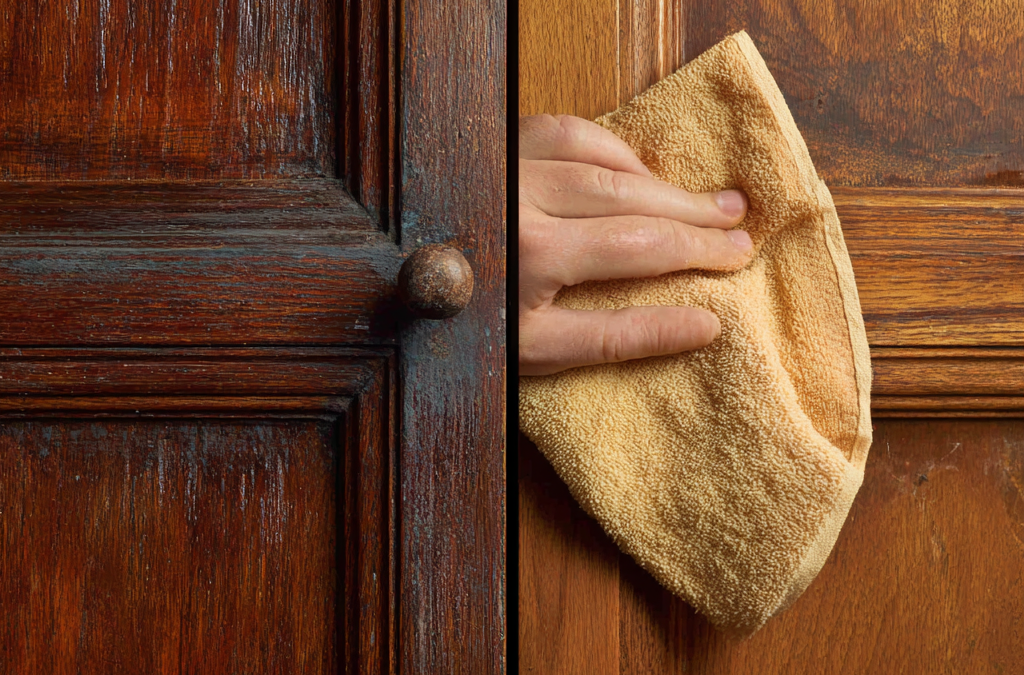
When winter in Montana decides to show up, it does not ease into the driveway. It slides in sideways, brings its friends, and stays a while. That kind of weather is hard on your home, especially anything made of wood.
Cabinets, doors, trim, and built-ins are all working quietly in the background, expanding and contracting with the seasons. A little attention before the deep freeze can keep small issues from turning into expensive repairs.
Think of this as your year-end woodwork checkup. Ten quick inspections you can do in an afternoon to keep your home feeling tight, warm, and solid all winter long.
Why a year-end woodwork checkup matters in Montana
In a climate like Bozeman, Big Sky, and the Gallatin Valley, you get dry indoor air, wild temperature swings, tracked-in snow, and plenty of daily wear. That combination is tough on:
- Cabinet finishes around sinks and dishwashers
- Exterior doors and weatherstripping
- Interior doors and trim as the house shifts a little with the seasons
Looking things over now means you catch problems early, when they are still simple and cheap to fix.
Your 10-point year-end woodwork checklist
1. Check door reveals and how they swing
Walk your house and look at the gaps around each interior door. You are checking for:
- Tight spots where the door rubs
- Big gaps at the top or latch side
- Doors that have started to catch or not latch cleanly
Minor movement is normal as humidity changes, but dragging or binding can usually be fixed with hinge adjustments or small plane work on the edge. Catching this early keeps paint and finish from chipping.
2. Tighten door and cabinet hardware
Grab a screwdriver and lightly snug up:
- Hinges on interior and exterior doors
- Cabinet door hinges
- Drawer fronts and pulls
Loose hardware leads to sagging doors, misaligned reveals, and extra stress on the wood. A few turns of a screw now beats patching out a stripped hole later.
3. Look for finish wear at sink bases and dishwashers
Cabinet bases near water are the first to show trouble. Open up:
- Sink bases
- Cabinets next to dishwashers
- Any pull-outs that sit near plumbing or ice makers
Check for:
- Cloudy or dull finish
- Swollen edges
- Peeling or lifting around joints and seams
If you see anything suspicious, take a photo. Our finishing team can often touch up or refinish before damage gets into the wood itself.
4. Inspect cabinet interiors for leaks or stains
While you are under sinks and near appliances, look inside boxes for:
- Water staining
- Warped bottoms
- Soft spots in particle board or shelves
Small leaks from supply lines, drains, or dishwasher hoses can go unnoticed until they have done real damage. This is a good time to fix plumbing and make sure the surrounding cabinets are still sound.
5. Walk your exterior doors and check weatherstripping
Exterior doors are your first defense against cold and wind. Open and close each one and check:
- Weatherstripping for gaps, tears, or compression
- Door sweeps for wear or missing contact points
- Thresholds for daylight, drafts, or loose fasteners
If you can see light around a door, you can be sure cold air is coming in. Weatherstripping is relatively inexpensive, and good fit helps your doors and your heating system both work less.
6. Check finish wear at entries and mudrooms
Entry and mudroom trim, cabinet toe kicks, and built-in benches take a beating from boots, sand, and melting snow. Look closely at:
- Baseboards and casing near doors
- Bench fronts and cubbies
- Cabinet ends and toe kicks at ground level
You are looking for worn-through finish, dings into raw wood, or swollen edges. Getting a fresh coat of finish or spot repair in these areas can keep moisture from working deeper into the material.
7. Give your stair railings and handrails a once-over
Stair parts and handrails are both safety features and part of your home’s millwork package. Grab each section and give it a firm shake:
- Any looseness at posts or wall brackets
- Finish wear in high-contact areas
- Splinters or rough edges developing
A tight railing with a sound finish is safer and looks better. If you need help with stair components or rail refinishing, our shop can assist as part of a winter tune-up.
8. Look at your fireplace surround and nearby built-ins
Fireplaces and stoves put out both heat and dry air. That can be tough on wood mantels, surrounds, and nearby built-ins.
Check for:
- Hairline cracks in paint at joints and seams
- Finish dulling on surfaces close to heat sources
- Gaps opening between panels, trim, or the wall
Many of these are cosmetic and easy to fix if you do not wait years to address them. Small adjustments and touch-ups go a long way.
9. Check humidity levels for cabinet and door health
Wood likes stability. In winter, indoor air in Montana can get extremely dry.
If you do not already have one, pick up a simple hygrometer and see where you are. Aim for:
- Roughly 35–45 percent relative humidity indoors through winter
This range helps:
- Reduce seasonal wood movement
- Keep cabinet doors and drawers operating smoothly
- Extend the life of your finishes
If the air is too dry, consider a whole-home humidifier or adding humidity in key living areas.
10. Make a short list for repairs, touch-ups, or upgrades
After your walk-through, make a simple list:
- Things you can handle yourself with cleaner, pads, and a screwdriver
- Items that need professional finishing or repair
- Areas that are simply ready for an upgrade
That list is your winter woodwork plan. It does not have to be long, it just has to be honest.
If you want help prioritizing or pricing, send us photos and a few notes about what you found. We can tell you what is a quick fix and what needs proper shop time.
Winter Woodwork Checkup: Let us handle the list
If this all sounds like a lot to squeeze into a busy December, you do not have to do it alone. Wilson Cabinetry can help with a Winter Woodwork Checkup or a limited-time maintenance package that might include:
- Inspecting key cabinets, doors, and trim
- Recommending repairs or touch-ups
- Handling finish work in-shop or on-site where appropriate
Reach out through our contact page, mention the “Winter Woodwork Checkup,” and we will follow up with details.
FAQ
How often should I check wood cabinets and doors in a Montana home?
Once a year, before the deep freeze, is a solid baseline. If you have had leaks, a lot of construction activity, or major humidity swings, a mid-year look is a good idea too.
What are the biggest trouble spots for cabinet finish in winter?
Sink bases, dishwashers, trash pull-outs, and mudroom or entry cabinets take the most abuse. Anywhere water, snow, or heavy use meet wood deserves a closer look.
Can minor cabinet and door issues wait until spring?
Some can, but small problems around moisture, finish failure, or hardware loosening are best handled sooner. Early repairs are almost always cheaper than waiting until materials are damaged.