
When winter settles into Montana, your house stops being just a place you sleep and becomes the place you live. Long evenings, early sunsets, boots by the door, the whole deal. That’s when you really feel whether your home is warm and inviting, or just… there.
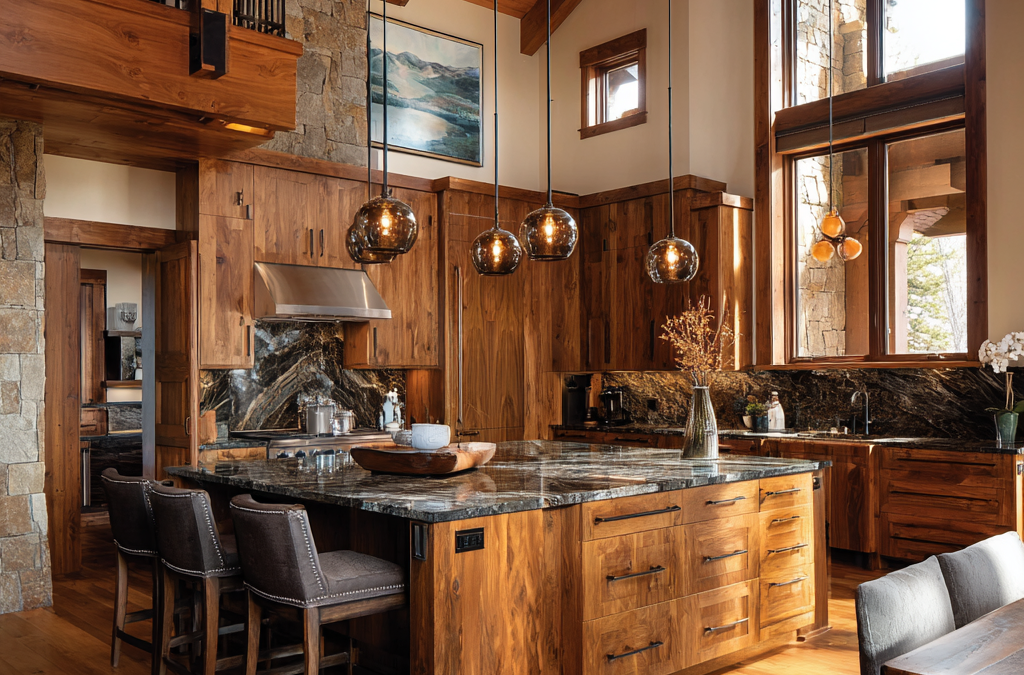
A big part of that feeling comes from the woods and finishes you choose. The right combination of warm wood cabinets, custom millwork, and interior doors can make a Bozeman townhome, a Big Sky ski house, or a Gallatin Valley ranch feel solid, cozy, and pulled together.
This isn’t about trend-of-the-year styling. It’s about building a home that looks good now, wears well over time, and still feels right after a few more Montana winters.
Why warm wood belongs in winter home design in Montana
Montana winters can make even a big space feel small if it’s cold, echoey, and bare. Warm woods change that. They add visual warmth, sound absorption, and a sense of permanence you don’t get from hollow-core doors and thin trim.
In winter home design in Montana, we like to think in layers:
- Cabinets that carry the main tone and character
- Millwork that frames the architecture and ties rooms together
- Doors that feel solid in your hand and look like they belong with everything else
When those three pieces are working together, the whole house feels intentional, not pieced together over a dozen hardware-store trips.
If you’re just starting to plan, take a look at what’s possible with our custom cabinetry here.
Best wood species for cabinets and millwork: oak, walnut, alder
You’ve got a lot of wood choices. Here are three we reach for over and over in Montana homes.
Oak
Great for: modern mountain, lodge, and transitional styles
- Strong, with a defined grain that takes stain beautifully
- Works well with cerused finishes and tinted clears
- Pairs nicely with stone, steel, and concrete
Walnut
Great for: statement kitchens, libraries, and living rooms
- Rich, deep brown with natural variation
- Looks fantastic with clear or lightly tinted finishes
- Adds instant “this was built on purpose” energy to a space
Alder
Great for: rustic and relaxed spaces
- Softer, with a more subtle grain and occasional knots
- Takes warm stains very well
- Ideal when you want a slightly aged, lived-in feel
We’ll often mix species strategically—walnut accents in a primarily oak kitchen, for example—to give depth without turning everything into a knotty mess.
Pairing cabinets and custom millwork for a whole-home, winter-cozy feel
Cabinets may be the star of the kitchen, but custom millwork is what makes the whole home feel finished.
In real projects around Bozeman and the Gallatin Valley, we’re often tying together:
- Kitchen and bath cabinets
- Ceiling beams and paneling in living spaces
- Stair parts and railings
- Window and door casings
- Fireplace surrounds and built-ins
For a winter-cozy look, we like to:
- Run matching or complementary species across cabinets and millwork
- Carry similar profiles in crown, base, and door casing
- Use paneling or shiplap in targeted areas, not everywhere
Done right, you walk from kitchen to living room to entry and nothing feels like it came from a different store.
Matching interior doors and trim to your warm wood cabinets
Interior doors are one of the most underrated parts of a home. You feel them every day in the weight, the sound they make when they close, and the way they frame a room.
To get that “this whole house fits together” effect:
- Match species between doors and key trim (oak with oak, alder with alder, etc.)
- Coordinate panel style with your cabinet doors (Shaker with Shaker, raised with raised, or a simplified cousin)
- Keep casing profiles consistent through main living spaces
You don’t have to match every room perfectly, but your main floor will feel calmer and more intentional if doors, trim, and cabinets are speaking the same design language.
Finishes that feel warm and survive Montana winters
Once the species and profiles are nailed down, finishes do the rest of the work.
For warm, durable results in a dry climate:
- Lean toward matte or satin sheens; they feel softer and hide small wear better
- Use professional-grade clear coats or stains with proper sealing on edges and joints
- Consider tinted clears if you want to gently adjust tone without burying the grain
Montana’s dry winters demand finishes that can handle a bit of movement without cracking or looking tired after a couple of seasons. That’s where shop-applied systems and controlled environments matter.
If you need help with finishing, touch-ups, or matching new work to existing wood, our finishing team can step in.
How to plan your warm wood palette and millwork combo
Here’s a simple way to think about it when you’re planning your project.
Start with:
- One primary wood tone for cabinets
- One complementary tone or paint color for contrast
- A coordinated plan for trim, doors, and key millwork features like beams or fireplace surrounds
From there, we can:
- Build a warm wood palette for your specific home
- Suggest trim profiles that match your architecture
- Map out where to use wood heavily, and where to lighten up
If you’d like a hand, we can put together a Warm Wood Palette & Trim Suggestions PDF based on your floor plan, photos, and a quick conversation about your style.
We’ll help you choose wood, finishes, and details that feel good in December and still make sense ten winters from now. You can get in touch here.
FAQ
Do all my woods have to match exactly?
No. In fact, a bit of contrast usually looks better. The goal is coordination, not cloning. Matching species across major elements, then adjusting tone slightly with stain or clear finishes, usually gives the best result.
Is walnut too dark for a Montana winter home?
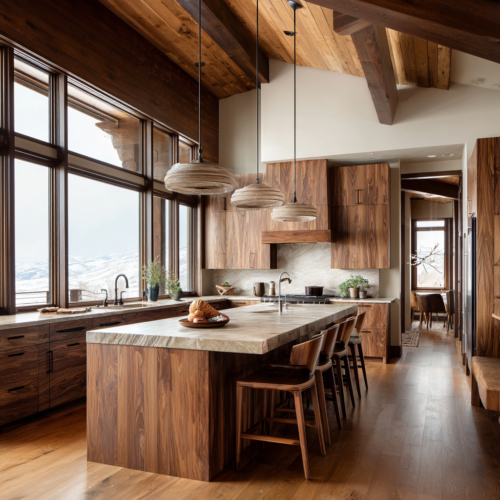
Not if you balance it with lighter walls, good lighting, and maybe a painted island or upper cabinets. Walnut used strategically can make a space feel rich and grounded, not gloomy.
Can you work with existing trim or doors and still update my cabinets?
Often, yes. We can match species and profiles closely, or design cabinets that complement what you already have. In some cases, swapping just a few key elements—like doors or base trim on the main floor—pulls everything together.