
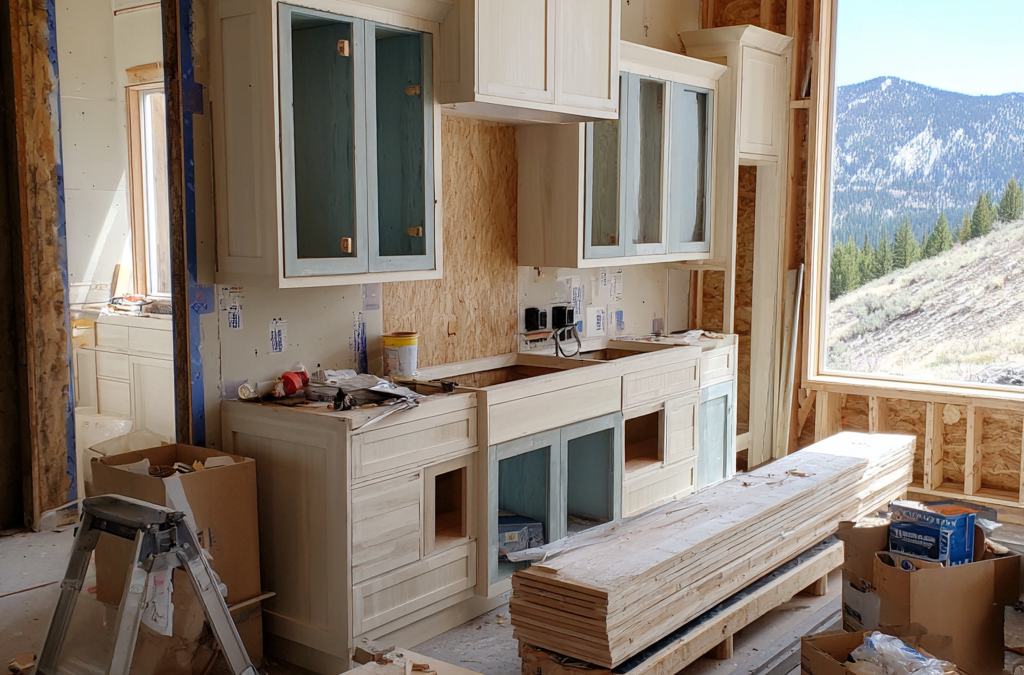
If you build in Montana, you know spring doesn’t arrive quietly. It shows up all at once, along with every contractor’s backlog, every homeowner’s remodel dream, and every supplier’s “lead time update.”
That’s why the spring builds that stay on schedule usually start in winter.
This is the no-fluff timeline we use with builders, designers, and homeowners across Bozeman, Big Sky, and the Gallatin Valley to keep cabinetry, doors, and millwork from becoming the bottleneck. It covers what to lock, when to lock it, and which decisions cause the biggest delays when they get pushed “just one more week.”
Keywords this post supports: custom cabinet lead times, winter construction planning Montana, cabinet maker Bozeman, millwork lead time
The quick answer for planning-mode readers
If you want cabinets, doors, and millwork installed in spring, you should be making your key decisions in winter.
A safe rule of thumb: plan to finalize layout, appliances, door style, trim profiles, and finish direction at least 8–12+ weeks before install, depending on scope and complexity.
If you’re already thinking “that’s sooner than I expected,” you’re exactly who this timeline is for.
Why cabinetry, doors, and millwork impact the entire schedule
Cabinets, doors, and millwork don’t live in a vacuum. They affect:
- Electrical and plumbing rough-ins
- Hood venting and appliance clearances
- Flooring sequencing and countertop templating
- Trim profiles, casing widths, and drywall returns
- Paint schedules and finish coordination
When those decisions happen late, the jobsite starts waiting. And waiting in spring is expensive.
A Montana-friendly winter-to-spring build timeline that works
This timeline is written backward from your target install window. Adjust the weeks based on the size of the project, finish complexity, and whether it’s new build or remodel.
12–16 weeks before install: Get the big decisions out of the way
This is when you prevent most spring delays.
Lock these items:
- Rough layout direction (and whether anything is moving: sink, range, island, openings)
- Appliance sizes (or exact models if possible)
- Door style direction (Shaker vs slab vs raised, interior door style if included)
- General finish direction (paint vs stain vs clear; sheen range)
- Millwork scope (base, casing, crown, paneling, beams, fireplace surround, built-ins)
What to send your cabinet/millwork shop:
- Floor plan with dimensions and ceiling heights
- Photos of the space (especially remodels)
- Appliance spec sheets or confirmed sizes
- Inspiration images that show style and finish direction
If you’re a builder, this is also when you set the expectation with the homeowner: decisions have dates, not vibes.
10–12 weeks before install: Confirm the layout and storage plan
This is where the cabinetry starts doing real work.
Finalize:
- Cabinet layout and storage priorities (deep drawers, tray dividers, pantry roll-outs, trash/recycling, coffee zone)
- Clearances and workflow (prep, cook, clean zones, traffic lanes)
- Island size, seating, and power needs
- Any built-ins outside the kitchen (mudroom, living room, office)
This step is where “kitchen looks good” turns into “kitchen works.”
8–10 weeks before install: Approvals and shop drawings
This is the point where projects either stay smooth or start drifting.
Approve:
- Cabinet drawings and elevations
- Appliance openings and filler plans
- Door style details and overlay/inset decisions
- Trim/moulding profiles and transitions
- Hardware intent (category and style family, not necessarily every SKU)
Tip from the field: inset looks great, but it demands precision and stable conditions. If the schedule is tight, full overlay is often the smarter choice.
6–8 weeks before install: Field measurements and site reality check
This is where “paper” meets “walls.”
Plan measurement windows:
- Remodels: after demo, when walls and floors are exposed
- New builds: after framing and rough openings are verified, before insulation and drywall lock everything in
Confirm:
- Out-of-square conditions
- Ceiling variations
- Window heights and sill details
- Flooring buildup and transitions
Montana homes are rarely perfect squares. That’s not a problem if you measure at the right time.
4–6 weeks before install: Production and finishing
This is where custom cabinet lead times and millwork lead time matter.
While cabinets and millwork are being built and finished, the jobsite should be executing:
- Electrical and plumbing rough-ins (aligned with approved plans)
- Venting and hood framing details
- Under-cabinet lighting prep
- Drywall, paint prep, and flooring coordination
If you’re aiming for a clean install, don’t schedule flooring and paint as an afterthought. Align it with the cabinet timeline.
2–4 weeks before install: Delivery logistics and pre-install prep
This is where small miscommunications cause big delays.
Confirm:
- Site access and storage (especially if weather is ugly)
- Delivery windows and staging areas
- Who is responsible for protection and climate control
- Any final trade sequencing changes
If your cabinets arrive and the site isn’t ready, the schedule gets expensive fast.
Install week: Cabinets first, then template, then trim
A smooth install week looks like this:
- Cabinets set, leveled, secured
- Panels and fillers installed
- Hardware and adjustments staged
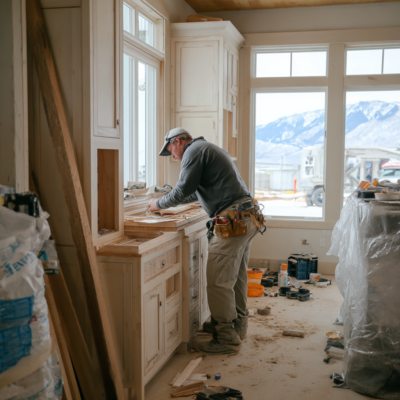
- Countertops templated after cabinets are locked
- Millwork and trim details completed after tops (or coordinated by scope)
For door packages, coordinate interior door install around flooring and trim sequencing so reveals and casing align cleanly.
If you’re ready to talk through your project and lock dates, contact us here
Common spring-delay mistakes (and how to avoid them)
Appliance “TBD”
If appliance sizes aren’t confirmed early, cabinet design and rough-ins become guesses. Guesses become change orders.
Finish indecision
You don’t need every color finalized day one, but you do need a direction. Paint vs stain vs clear is a schedule decision, not just a style decision.
Trim picked too late
Waiting to choose casing, base, and crown until after drywall leads to rushed choices and mismatched transitions.
No measurement window
Field conditions matter. Build in time to measure at the right moment, not the day before install.
FAQ
How far in advance should I plan custom cabinets for a spring project in Montana?
Plan to finalize layout, appliance sizes, and finish direction at least 8–12+ weeks before install. Complex projects, specialty finishes, and full-home millwork packages may need more runway.
What decisions cause the biggest spring delays for cabinets and millwork?
Late appliance changes, delayed finish approvals, and trim profile decisions made after drywall are the top offenders.
Can a cabinet shop help builders stay on schedule?
Yes. A good shop provides clear drawings, realistic lead times, and problem-solving when field conditions don’t match the plans. The earlier the shop is involved, the fewer surprises you’ll see in spring.