
If you live in Montana, you already know winter has a personality. It’s dry, it’s stubborn, and it has a knack for exposing weak points in anything made of wood. Cabinets are no exception.
Every year we talk with homeowners in Billings, Bozeman, Big Sky, and across the Gallatin Valley who are stuck on the same decision: cabinet paint vs stain. Both can look great. Both can last. But they don’t behave the same way once the heat’s on, the air gets dry, and daily life starts doing what daily life does.
This is the straight, contractor-grade breakdown: pros and cons, sheen choices, wood species, what hides wear best, and what’s easiest to touch up. No fluff, no magic promises, just what works in real Montana homes.
If you want to see how we build and finish cabinets for this climate, start here:
Custom Cabinets: https://wilsoncabinetry.com/custom-cabinets/
How Montana’s dry winters affect cabinet finishes
Wood moves. Not dramatically, but enough to matter. When indoor humidity drops in winter, wood components can shrink slightly. In warmer seasons, they swell back a bit. That movement is nominal, but it affects finishes differently.
Here’s what Montana winters tend to do:
- Emphasize seams and joints on painted doors if the finish system isn’t built for movement
- Dry out interior air, which can make doors and drawers feel slightly “tighter” or “looser” depending on conditions
- Punish edges and high-use zones (sink bases, trash pull-outs, dishwashers) where moisture meets wood
- Highlight wear in high-traffic kitchens where boots, kids, and gatherings are part of the normal routine
A simple target helps a lot: keep indoor relative humidity around 25–35% in winter if you can. It’s one of the easiest ways to protect cabinet doors, drawer fronts, and wood trim over time.
Painted cabinets in Montana: clean look, honest maintenance
Paint is popular for a reason. It’s crisp, versatile, and fits everything from modern mountain kitchens to classic ranch remodels.
Pros of painted cabinets
- Huge color flexibility (warm whites, soft taupes, deep greens, charcoal)
- Clean, uniform appearance that makes a kitchen feel bright in winter
- Great for Shaker and slab door styles
- Easier to refresh the look down the road without changing wood species
Cons of painted cabinets
- Chips and dings show more clearly, especially on darker colors
- Hairline “seam lines” can appear at joints over time (normal, but noticeable)
- Touch-ups require matching paint and sheen, and they’re most visible in direct light
- The quality of the finish system matters more than the color itself
Sheen choices for paint (what actually holds up)
- Matte: Looks high-end and soft, but can show fingerprints and burnish spots if scrubbed aggressively
- Satin: The best all-around option for most kitchens; durable and forgiving
- Semi-gloss: Tough, but it highlights surface imperfections and can feel “shiny” in natural light
If you want painted cabinets that behave well in dry winters, good prep and pro-grade coatings matter. “Paint is paint” is how you end up with a cabinet that looks great on install day and irritated by February.
Stained cabinets in Montana: warmth, grain, and easier wear camouflage
Stain (or a clear finish on naturally rich wood) is the workhorse choice for longevity and warmth.
Pros of stained cabinets
- Wood grain hides minor scuffs, wear, and daily-life marks better than paint
- Touch-ups can blend more naturally, especially on mid-tone stains
- Warmth and depth look great in winter light
- Pairs well with Montana materials like stone, steel, and natural textiles
Cons of stained cabinets
- Color options depend on wood species and grain structure
- Large color changes later can require more work than repainting
- Some woods can vary naturally (which is beautiful, but not perfectly uniform)
Stain is often the right choice for homeowners who want a kitchen that ages gracefully and doesn’t show every little bump. In busy households, stain can be the “looks better longer” option.
Wood species that pair well with paint vs stain
The wood underneath matters. Here are common, Montana-friendly pairings:
Best species for stained or clear finishes
- White oak: Great grain, modern mountain-friendly, handles tinted clears and cerused looks well
- Walnut: Naturally rich tone; often best with clear or lightly tinted finishes
- Alder: Warm, rustic-leaning, stains beautifully, often with softer character marks
- Maple: Can stain unevenly if not handled properly, but works beautifully with clear or professional stain systems
Best materials for painted finishes
- MDF (for doors and panels): Extremely smooth surface, excellent for paint; edges and sealing matter
- Paint-grade hardwoods: Good for face frames and certain details when finished properly
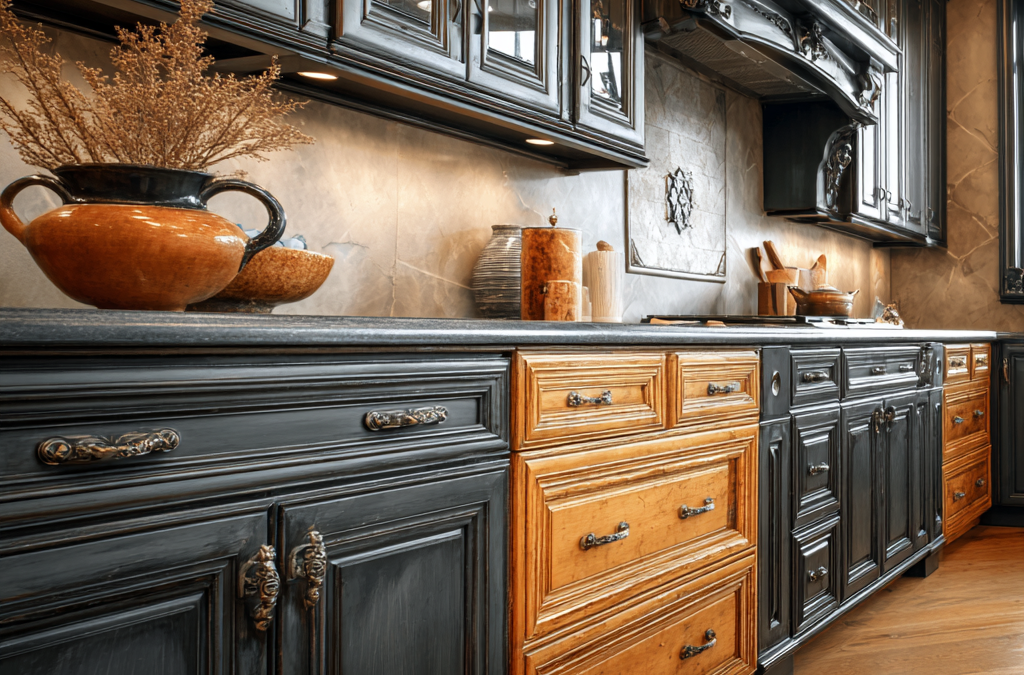
A common “best of both worlds” approach in Montana kitchens is plywood cabinet boxes, painted doors where you want a clean look, and stained accents (like an island or built-in hutch) for warmth.
What hides wear best in real life
If you have kids, dogs, frequent guests, or you actually cook, wear is part of the deal. The trick is choosing a finish that stays good-looking even when life happens.
In general:
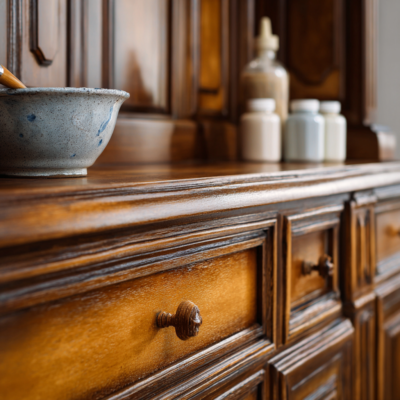
- Stained and clear finishes hide daily wear best, especially on open-grain woods like oak
- Mid-tone stains are the most forgiving because small marks blend more easily
- Painted finishes show chips more because you’re seeing contrast between paint and substrate
- Matte paint can burnish in high-touch areas if repeatedly scrubbed
If you love the painted look but want less maintenance stress, choose satin, keep a touch-up kit on hand, and plan your layout so high-abuse zones are protected with the right materials.
What’s easiest to touch up
This is where homeowners usually appreciate the honest answer.
- Stain and clear finishes can be easier to blend for small scuffs, especially if the wood tone is consistent and the sheen isn’t ultra-glossy.
- Paint can be straightforward to touch up, but only if the color and sheen match perfectly. Even then, touch-ups may show in certain light, especially on large flat doors.
If you want professional finishing help, touch-ups, or color matching, this is exactly what our shop supports:
Additional Services (Finishing & Touch-Ups): https://wilsoncabinetry.com/additional-services/
The quick decision guide: paint or stain for your kitchen?
Choose paint if:
- You want a brighter, cleaner look, especially in low winter light
- You prefer a modern or classic aesthetic with uniform color
- You’re okay with occasional touch-ups and realistic wear over time
Choose stain or clear if:
- You want warmth, grain, and a finish that hides daily use better
- You want a kitchen that ages gracefully and feels “grounded”
- You prefer natural materials that look better the longer you live with them
Still torn? A two-tone approach (painted perimeter, stained island) is popular in Montana and Wyoming homes because it balances brightness with warmth.
Want help choosing a finish that fits your home and your winter?
Finish choice is easier when you can see real samples under your own lighting and talk through how your household actually uses the space. If you want a finish plan that holds up through Montana winters and still looks right in summer, we can help you choose a direction and build it properly.
FAQ
Which cabinet finish is best for Montana’s dry climate?
Both paint and stain can perform well in Montana if the materials and finish system are high quality. Stain and clear finishes tend to hide wear better, while paint offers more color flexibility but shows chips more readily.
What sheen is most durable for painted cabinets?
Satin is usually the best balance of durability and forgiveness. Semi-gloss is tougher but highlights imperfections; matte looks great but can show burnishing in high-touch areas.
Is stain or paint easier to maintain long-term?
Stain and clear finishes generally hide scuffs and small marks better. Painted cabinets can be easy to clean but may need touch-ups over time, especially on edges and high-use zones.