
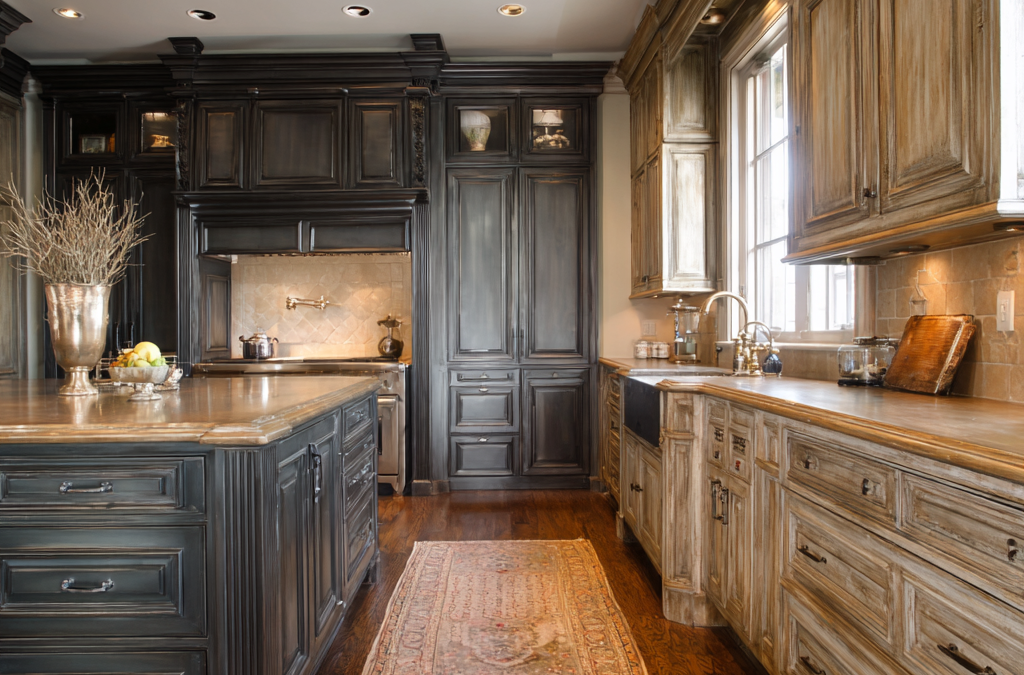
If you live in Montana, you already know winter doesn’t whisper. It dries the air, tests every material in your house, and exposes shortcuts fast. That’s why choosing the right cabinet finish matters. It’s not just about color; it’s about protection, durability, and how your kitchen holds up through Bozeman cold snaps and Big Sky sunshine. Here’s a plain-spoken guide to the best cabinet finishes for our climate—what to expect, how to care for them, and how to pick a system that’ll go the distance.
How Montana’s dry winters affect finishes
Dry air pulls moisture from wood. When relative humidity drops, panels shrink a hair, joints telegraph a bit, and brittle finishes can show hairline cracks—especially on painted doors. None of this is “failure” when you’re working with natural materials; it’s physics. The goal is to choose a finish built for movement and keep indoor humidity in a comfortable zone (aim for 35–45% RH). That one habit alone solves half the problems we get called to fix in the Gallatin Valley.
Painted cabinets (pros, cons, sheen choices, touch-up reality)
Painted cabinets look clean, tailored, and modern mountain when done right. We often build painted doors in MDF for a dead-flat surface, then pair them with plywood cases for strength.
Pros
• Endless color options; easy to refresh the look down the road
• Smooth, uniform appearance—great for Shaker and slab styles
• Modern profiles shine in full overlay or inset
Cons
• Chips show as soon as they happen (that’s life with paint)
• Dark colors highlight dust and fingerprints more
• Needs a pro-grade system and edge sealing to handle dry winters
Sheen choices
• Matte: Warm, design-forward, hides glare; shows oils more, clean gently
• Satin: Our go-to for kitchens—balanced durability and easy maintenance
• Semi-gloss: Toughest surface but shows imperfections and texture more
Touch-ups
Plan for a small touch-up kit. Little dings are normal around dishwashers, trash pull-outs, and busy drawer banks. If you want a painted look that really lasts, let us spec the right system and build you a maintenance plan.
Stained and clear finishes (wood selection, grain, protection)
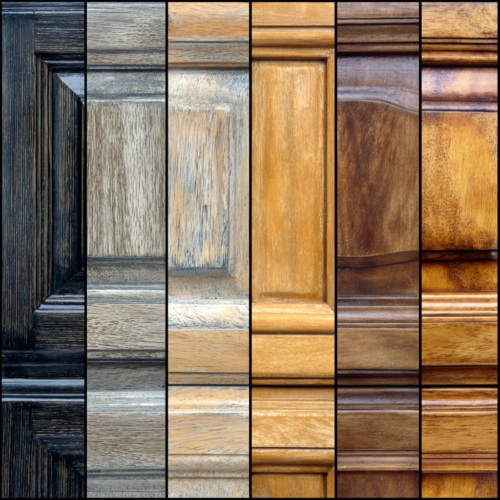
If you want warmth and easier long-term maintenance, stain and clear finishes earn their keep. They celebrate the wood—oak, walnut, cherry, ash—and they hide small scuffs better than paint.
Pros
• Shows natural grain and character; ages gracefully
• Touch-ups blend more easily than paint
• Great in lodge and rustic interiors, or modern mountain with rift-cut oaks
Cons
• Color is tied to species; big color changes later require more work
• Needs a quality topcoat to resist water and daily wear
Protection systems
• Clear catalyzed lacquer or 2K waterborne urethanes deliver strong, kitchen-grade protection without the plasticky look
• Matte and satin clears keep things soft and natural; higher sheen equals more surface toughness but more glare
Specialty finishes (tinted clears, cerused, conversion varnish)
Tinted clears
A translucent tone that keeps grain visible while warming or neutralizing color. Great for dialing in walnut or calming yellow in some oaks.
Cerused (limed) finishes
Brings out the grain pattern—especially on oak—by filling the open pores with a contrasting pigment. It’s a high-end look that pairs perfectly with modern mountain architecture around Big Sky.
Conversion varnish
The workhorse when you want serious toughness. It’s a catalyzed finish with excellent chemical and abrasion resistance. Pros: durable, kitchen-proof. Cons: repairs are trickier and should be done by a pro to avoid witness lines. That’s what our finishing team is for.
Care schedule: daily, seasonal, and long-term
Daily
• Wipe spills with a soft, slightly damp microfiber; dry immediately
• Mild dish soap for greasy spots—no bleach, ammonia, or abrasives
• Open the dishwasher after steam has vented, not into your door faces
Seasonal
• Hold indoor humidity around 35–45% RH in winter
• Check sink bases, dishwasher sides, and trash pull-outs for wear
• Tighten hinge screws and adjust door reveals if needed
Long-term
• Keep a touch-up kit on hand; repair chips and nicks early
• Add felt pads under décor and small appliances
• Ask about a maintenance topcoat on heavy-use zones every few years
Want a finish that fits how you live, not just how it photographs? We’ll build a sample set you can put under your own lighting and a care plan you’ll actually use. Get started here
Get a finish sample set and a care plan from our team
If you’re weighing paint versus stain, or you want a clear finish that still laughs at spaghetti night, we’ll walk you through real samples and real maintenance expectations. We design finishes for Bozeman and Big Sky homes that look great in August and hold together in January. Explore styles and construction here and tap our finishing team for projects, touch-ups, or repairs here.
FAQ
Which finish hides wear best in a busy Montana kitchen?
Stained and clear finishes on open-grain woods (like oak) disguise day-to-day scuffs better than dark paints. For painted looks, choose a satin sheen and keep a touch-up kit handy.
What sheen is most durable for kitchen cabinets?
Semi-gloss is technically the toughest, but it highlights imperfections. Satin is the sweet spot for most kitchens in the Gallatin Valley—durable, easier to clean, and forgiving in real light.
Is paint or stain better for a dry climate?
Both perform well with the right system and humidity control. Paint shows chips more; stain blends wear better. If you want a painted look with fewer headaches, pair a pro-grade coating with MDF door panels and hold indoor RH around 35–45%.
Can conversion varnish be repaired if it chips?
Yes, but it’s a pro job. Conversion varnish is extremely durable, and repairs require the right materials and technique to avoid witness lines. Our finishing crew handles these regularly