
If you’ve ever stared at a wall of door samples and thought, “They all look good—now what?”, you’re not alone. Choosing the right cabinet door style is like picking the right boots for winter in Montana: it’s got to look the part and handle real life. Consider this your no-nonsense guide to cabinet door styles—written by folks who build them, install them, and stand behind them in Bozeman, Big Sky, and across the Gallatin Valley.
The most popular cabinet door styles (Shaker, Slab, Beaded/Beadboard, Raised Panel, Recessed Panel, Inset vs. Overlay)
Shaker
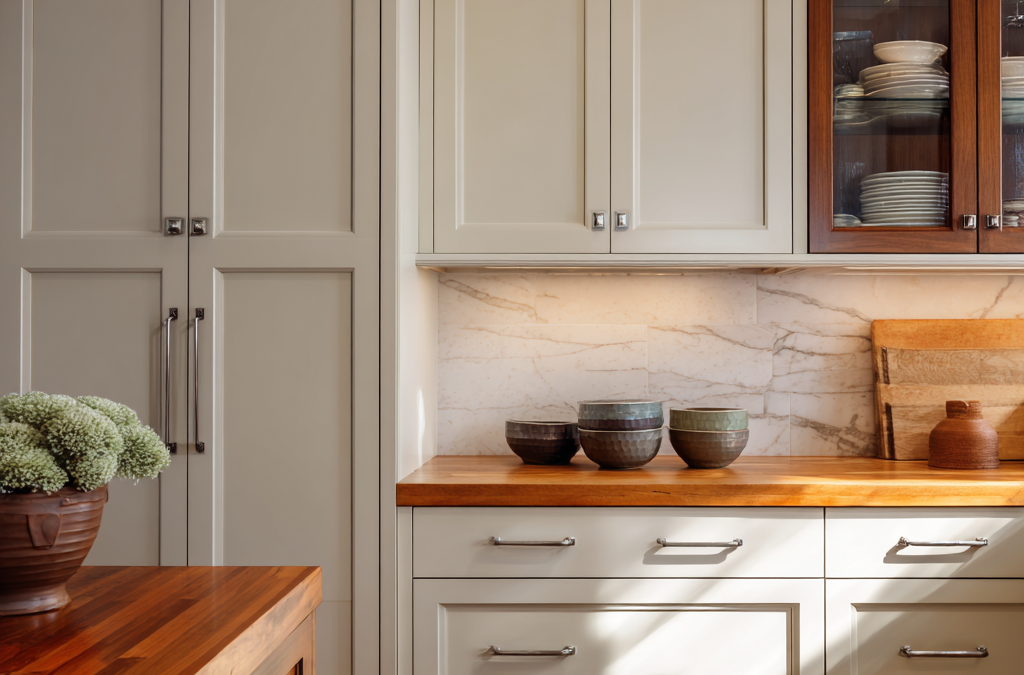
Clean lines, square rails, and a recessed center panel. Shaker is the Swiss Army knife of door styles—equally at home in a modern mountain kitchen or a classic farmhouse. Easy to clean, timeless, and plays well with almost any hardware.
Slab
Flat, minimalist faces with no rails or stiles. Slab doors are your ticket to sleek, contemporary spaces. They shine in modern mountain builds around Big Sky and urban remodels in downtown Bozeman. Best in stable materials and pro finishes for that perfectly smooth face.
Beaded / Beadboard
Vertical grooves in the panel bring texture and warmth—great for mudrooms, laundry, and cozy kitchens. Beaded doors feel “crafted,” especially in stained woods or painted neutrals.
Raised Panel
A center panel that’s proud of the frame. Classic, a touch formal, and right at home in lodge-inspired interiors or traditional homes with rich stains and substantial mouldings.
Recessed Panel
Like Shaker but with options—tapered or beveled inner edges, slimmer or wider rails. Think of it as Shaker’s cousin that can dress up or down depending on details.
Inset vs. Overlay (mounting style, not a door style)
- Inset: Door sits flush in the frame—tailored and high-end. Requires precise construction and stable climate control.
- Full Overlay: Doors overlap most of the face frame for a clean, modern look with tighter reveals.
- Standard/Partial Overlay: A little more frame shows; practical and budget-friendly.
What matches rustic, lodge, and modern mountain interiors
Rustic (cabins, barns, reclaimed looks)
Beaded/Beadboard, wide-rail Shaker, or textured slab in natural or lightly stained woods. Pair with visible grain—oak, hickory, or ash—and hammered or blackened hardware.
Lodge (timber frames, stone fireplaces, big spaces)
Raised panel or recessed panel with beefier rails. Deep stains, warm tones, and integrated millwork details like crown and light rail keep things substantial.
Modern Mountain (clean lines, warm materials)
Slab or narrow-rail Shaker, often in a mix of natural wood and painted finishes. Full overlay or inset keeps reveals tight and intentional. Tie in custom doors for a cohesive look throughout the house
Edge profiles and rail widths that change the look
Small choices change the whole read of a door.
- Rail/Stile Width: Narrow rails feel modern; wider rails feel traditional and more “architectural.”
- Inner Edge Profile: Square = crisp and contemporary. Soft bevel or ogee = classic, a touch of formality.
- Outside Edge: Chamfered or eased edges are durable and hand-friendly—good for busy kitchens and rental properties.
- Panel Reveal: A deeper recess adds shadow and visual depth; shallow reads flatter and modern.
These are the details we fine-tune in design meetings so your doors look intentional under real light—not just in a showroom.
Paint vs. stain vs. natural finishes for each style
Painted (great for Shaker, Recessed, and MDF Slab)
Ultra-clean and versatile. Choose durable pro-grade finishes to handle Montana’s dry winters. Light colors brighten short December days; deeper hues (forest, charcoal) warm up big spaces.
Stained (great for Raised Panel, Beaded, and natural-grain Shaker)
Shows off wood species and grain. Perfect in lodge and rustic settings. Stains hide wear well and add warmth when the snow moves in.
Natural/Clear (great for Slab and premium veneers)
Matte clears on oak, walnut, or rift-cut species deliver that high-end, honest-material look modern mountain homes love.
If you want guidance on the best finish for your home (and climate), we’ll walk you through samples and build a finish schedule that lasts. Start a conversation here
How to coordinate doors with custom millwork and interior doors
A kitchen shouldn’t look like it came from one catalog and your trim from another. We line up profiles, reveals, and finishes so the whole home feels designed—because it is.
- Match or complement crown, base, and casings with your door style for continuity. Browse profiles
- Coordinate interior door species and panel styles with your cabinetry for a cohesive first floor. See door options
- Carry finishes into built-ins, mudrooms, and vanities for a whole-home story.
See these styles in person and choose finishes with our team
Bring us your inspiration photos, floor plans, or just a sketch on a napkin. We’ll help you pick the right door style, mounting method, and finish system—then build it to handle Montana’s dry winters and shoulder-season swings.
FAQ
What’s the real difference between Shaker and Slab?
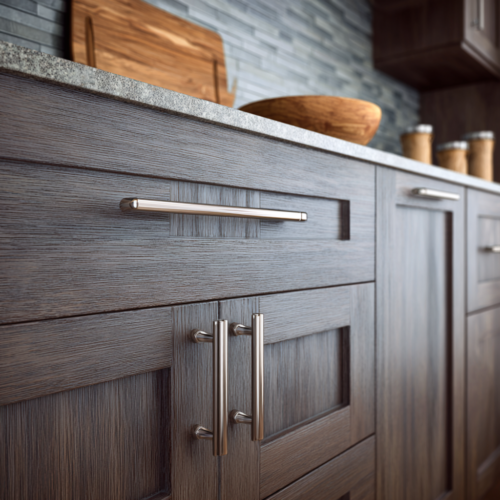
Shaker uses a frame-and-panel construction with a recessed center; Slab is a flat face. Shaker reads classic-to-transitional, while Slab is clean and modern. Both can work in modern mountain homes with the right finishes.
Is inset worth it in a dry Montana climate?
Inset looks incredible, but tolerances are tight. Keep indoor humidity around 35–45% and choose stable materials and pro finishes. For lower maintenance, full overlay delivers a similar clean look with more wiggle room.
Which door style is best for modern mountain homes?
Narrow-rail Shaker or Slab in natural wood tones, possibly mixed with a painted island. Full overlay or inset, minimal profiles, and matte finishes are the go-to recipe in Bozeman and Big Sky builds.
What finish hides wear the best for a busy family kitchen?
Stained and clear finishes on open-grain woods tend to camouflage daily wear. If you love painted, choose a durable system and plan for simple touch-ups in high-traffic zones.